hold
Auto workers escalate strike, walking out at largest Ford factory_我的网站

A | 在市场震荡调整之时,资金持续涌入ETF。 DETROIT -- The United Auto Workers union significantly escalated its walkout against Detroit's Three automakers, shutting down Ford's largest factory and threatening Jeep maker Stellantis.In a surprise move Wednesday night, 8,700 members left their jobs at Ford’s Kentucky truck plant in Louisville.And Thursday morning, union President Shawn Fain hinted at further action against Stellantis. “Here's to hoping talks at Stellantis today are more productive than Ford yesterday,” Fain wrote on X, formerly Twitter, without saying what might happen.Ford's truck plant makes heavy-duty F-Series pickup trucks and large Ford and Lincoln SUVs, hitting the company's most lucrative products. The vehicles made at the plant generate $25 billion per year in revenue, the company said in a statement.Fain said in a statement that the union has waited long enough “but Ford hasn’t gotten the message” to bargain for a fair contract. “If they can’t understand that after four weeks, the 8,700 workers shutting down this extremely profitable plant will help them understand it,” Fain said.The strike came nearly four weeks after the union began its walkouts against General Motors, Ford and Stellantis on Sept. 15, with one assembly plant from each company. The company, however, called the strike expansion “grossly irresponsible” and said it has made strong wage and benefit offers to the union. It said the move puts about a dozen other Ford facilities at risk, as well as parts supply plants that together employ over 100,000 people.A Ford executive said the union called a meeting at the company's Dearborn, Michigan, headquarters Wednesday afternoon where Fain asked if the company had another offer. High-ranking Ford executives responded that they are working on possibly bringing electric vehicle battery plants into the UAW national contract, essentially making them unionized. But they didn't have a significantly different economic offer, the executive said. Fain was told the company put a strong offer on the table, but there wasn't a lot of room to increase it and keep it affordable for the business, the executive said.Fain responded by saying, if that's the company's best offer, “You just lost Kentucky Truck Plant,” said the executive. The meeting only lasted about 15 minutes, he said. In a video, Fain said the union moved because Ford didn't change its offer. “We've been very patient working with the company on this,” he said. “They have not met expectations, they're not even coming to the table on it.”The escalation against Ford shows that Fain is trying to increase pressure on the company, said Marick Masters, a business professor at Wayne State University who follows labor issues.But Ford and the other automakers have made concessions and raised wage offers, he said. The companies, he said, “may have reached their resistance points to varying degrees.” Executives, he said, have bottom line positions they can’t cross in terms of staying competitive with other automakers.Fain, Masters said, likely is testing how far he needs to push Ford before going to “full throttle,” by taking all 57,000 Ford members out on strike.The union’s move doesn’t leave him optimistic for a quick end to the strikes, Masters said. “I think the issues that remain on the table are quite thorny,” he said, pointing to union demands that all workers get defined benefit pensions and health insurance when they retire.The UAW expanded its strikes on Sept. 22, adding 38 GM and Stellantis parts warehouses. Assembly plants from Ford and GM were added the week after that. The Kentucky strike brings to 33,700 the number of workers on strike against the three automakers.Thus far, the union has decided to target a small number of plants from each company rather than have all 146,000 UAW members at the automakers go on strike at the same time.Last week, the union reported progress in the talks and decided not to add any more plants. This came after GM agreed to bring joint-venture electric vehicle battery factories into the national master contract, almost assuring that the plants will be unionized.Battery plants are a major point of contention in the negotiations. The UAW wants those plants to be unionized to assure jobs and top wages for workers who will be displaced by the industry’s ongoing transition to electric vehicles.Since the start of the strike, the three Detroit automakers have laid off roughly 4,800 workers at factories that are not among the plants that have been hit by the UAW strikes.The companies say the strikes have forced them to impose those layoffs. They note that the job cuts have occurred mainly at factories that make parts for assembly plants that were closed by strikes.The UAW rejects that argument. It contends that the layoffs are unjustified and were imposed as part of the companies' pressure campaign to persuade UAW members to accept less in negotiations with automakers. The factories affected by layoffs are in six states: Michigan, Ohio, Illinois, Kansas, Indiana and New York. Sam Fiorani, an analyst with AutoForecast Solutions, a consulting firm, said he thinks the layoffs reflect a simple reality: The automakers are losing money because of the strikes. By slowing or idling factories that are running below their capacities because of strike-related parts shortages, Fiorani said, the companies can mitigate further losses.“It doesn’t make sense to keep running at 30% or 40% of capacity when it normally runs at 100%,” he said. Striking workers are receiving $500 a week from the union’s strike pay fund. In some states, laid-off workers could qualify for state unemployment aid, which, depending on a variety of circumstances, could be less or more than $500 a week. Fiorani said that as the strikes widen, more workers will likely be laid off at non-striking plants. Separate companies that manufacture parts for the automakers are likely to have laid off workers but might not report them publicly, said Patrick Anderson, CEO of the Anderson Economic Group in Lansing, Michigan. A survey of parts supply companies by a trade association called MEMA Original Equipment Suppliers found that 30% of members have laid off workers and that more than 60% expect to start layoffs in mid-October.。8月19日以来,股票型ETF净流入超670亿元,其中宽基ETF成为“吸金”主力。

B | 超670亿元扫货ETF 据Choice测算,8月25日,股票型ETF净流入158.74亿元。其中,创业板ETF易方达净流入23.48亿元,中证500ETF南方净流入19.21亿元,中证1000ETF南方、科创50ETF华夏、科创半导体ETF华夏等净流入均超10亿元。

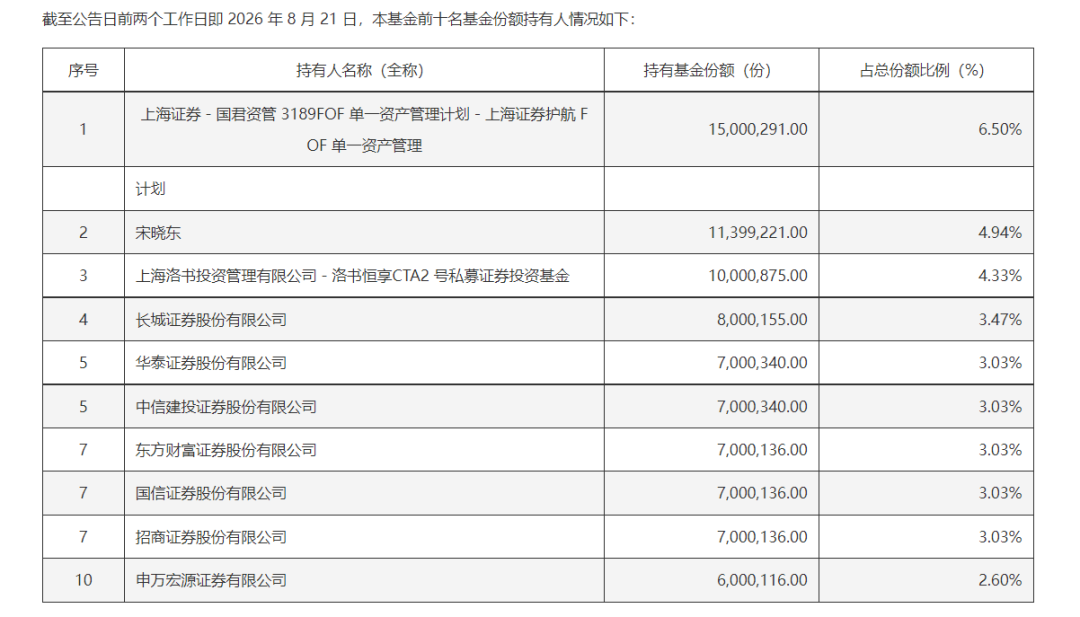
C | 拉长期限来看,8月19日至8月25日,短短5个交易日,股票型ETF净流入673.21亿元。其中,宽基ETF成为“吸金”主力。具体来看,科创50ETF华夏净流入80.99亿元,沪深300ETF华泰柏瑞净流入63.11亿元,创业板ETF易方达净流入63.06亿元。此外,科创50ETF易方达、上证50ETF华夏等净流入均超27亿元。 半导体主题ETF关注度高企。8月19日至8月25日,科创半导体ETF华夏净流入57.15亿元,半导体设备ETF国泰净流入18.44亿元,半导体设备ETF易方达净流入16.81亿元,芯片ETF华夏、科创芯片ETF嘉实等净流入均超10亿元。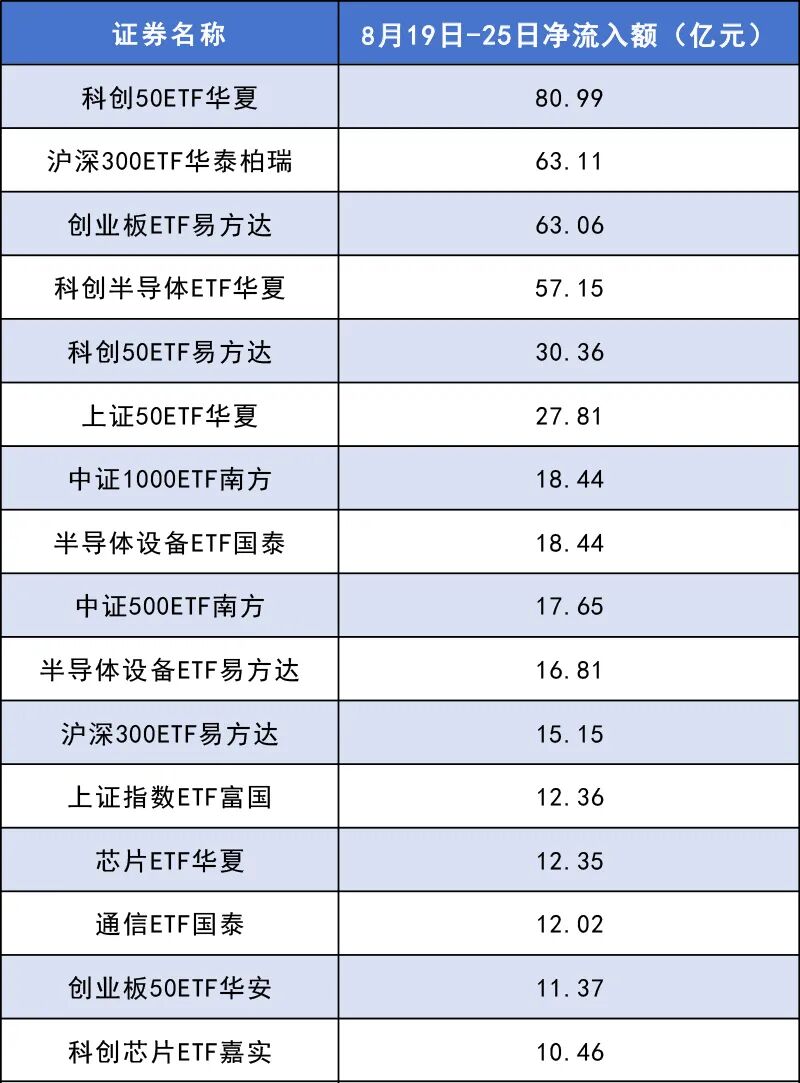 从近期新成立ETF的持有人结构来看,机构投资者频频现身。其中,华夏中证A股ETF上市交易公告书显示,截至8月21日,该ETF前十名基金份额持有人包括洛书恒享CTA2号私募证券投资基金、长城证券、华泰证券等机构。
 更多增量资金可期,近期ETF新品密集上报。

D | 8月21日,华宝基金、永赢基金、招商基金等9家基金公司集中上报创业板电池ETF。

E | 更早之前,易方达基金、鹏华基金、国泰基金等10家基金公司上报首批创业板算力基础设施ETF,万家基金、华泰柏瑞基金等6家基金公司上报首批创业板金融科技ETF。

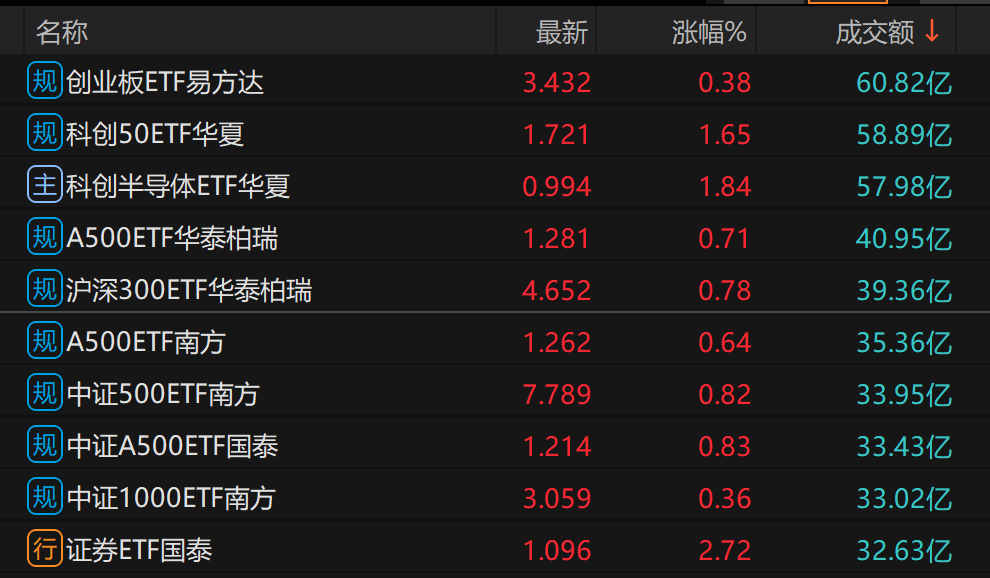
F | 有色板块关注度升温 从ETF的市场表现来看,8月26日,有色主题ETF领涨。 具体来看,有色金属ETF天弘、工业有色ETF平安、工业有色ETF万家等涨幅均超3%。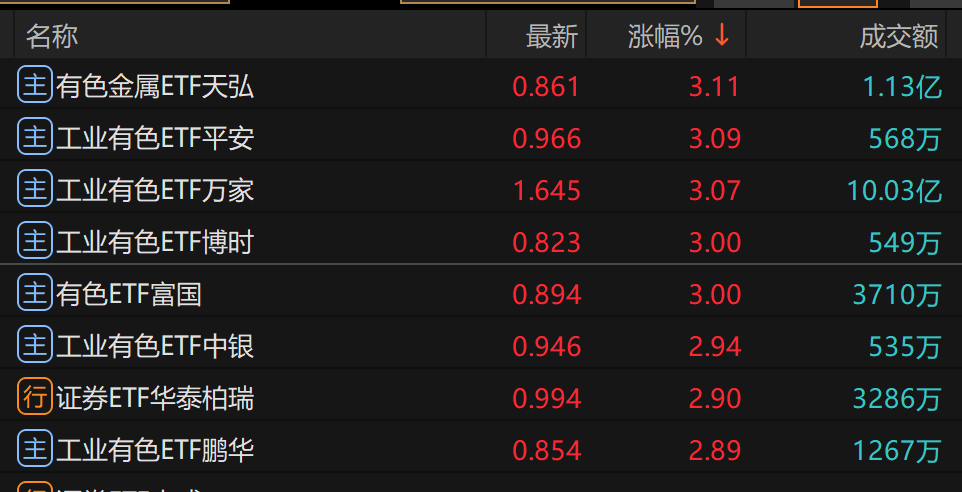 从成交量看,创业板ETF易方达成交额超过60亿元,科创50ETF华夏、科创半导体ETF华夏等成交额均近60亿元。
 从公募基金最新动向看,近期有色主题基金持续“上新”。

G | 截至8月26日,8月已有3只有色主题基金成立,包括国泰海通中证有色金属矿业主题ETF、易方达中证工业有色金属主题ETF联接基金、宝盈中证工业有色金属主题指数基金。 还有多只有色主题ETF有望入市。截至8月26日,天弘中证稀有金属主题指数基金、招商中证稀有金属主题ETF正在发行,广发中证工业有色金属主题ETF发布基金份额发售公告,即将启动发行。 工银瑞信基金认为,当前有色金属板块供给持续收紧,同时AI与新能源等领域新兴需求快速发展,拉动板块业绩高速增长,叠加海外宏观政策催化与市场风格切换,板块波动后仍有望延续上行。对于黄金板块,当前处于“政策预期修复,实际利率高位约束”的拉锯格局。一方面,美债与企业债集中发行推高债券收益率,流动性仍偏紧;另一方面,通胀缓和压制美联储进一步紧缩的预期,对黄金价格形成一定支撑。 (文章来源:上海证券报)。
Current article:http://c5c.foujiongwenruapoumeizhan.buzz/news/20260826_4748285.html
Published on:21:33:22